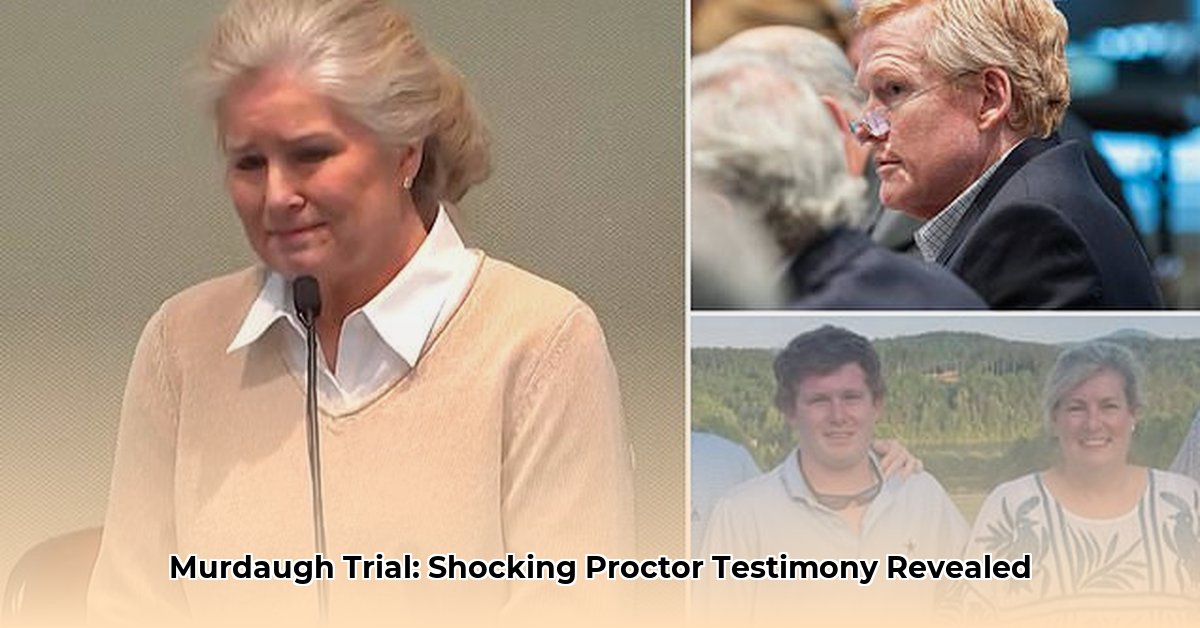
The Proctor Testimony: A Deep Dive into the Murdaugh Case
The highly publicized Murdaugh trial captivated the nation, focusing on the brutal murders of Maggie and Paul Murdaugh. Central to the prosecution's case was the testimony of Maggie Murdaugh's sister, Marian Proctor, and her brother-in-law, Bart Proctor. Their accounts offered critical insights into the Murdaugh family dynamics, relationships, and events surrounding the night of the murders. This analysis examines their testimony, its impact on the trial, and the broader legal implications.
The Proctors' Accounts: Family Dynamics and the Night of the Murders
Marian Proctor's testimony provided a detailed portrait of the Murdaugh family, particularly her close relationship with Maggie and Paul. She described frequent interactions, phone calls, and the overall family dynamic. This personal insight offered the jury a glimpse into the family's daily life, contextualizing the events leading up to the murders. Bart Proctor's testimony focused on his ability to identify Alex Murdaugh's voice on the infamous "Kennel video," a piece of crucial forensic evidence. Both testimonies, while not directly accusing Alex Murdaugh, significantly contributed to the prosecution's narrative.
Legal Interpretation and Challenges: Evidence and Hearsay
The prosecution and defense presented contrasting interpretations of the Proctors' testimony. The prosecution highlighted the inconsistencies between Murdaugh's statements and the family's accounts, suggesting a potential motive and cover-up. Conversely, the defense focused on the absence of direct evidence linking Alex Murdaugh to the crime and challenged the reliability and interpretation of the circumstantial evidence provided. The admissibility of certain testimony, particularly potential hearsay accounts, presented significant legal challenges and played a critical role in shaping the trial's narrative.
The "Kennel Video": A Cornerstone of the Prosecution's Case
Bart Proctor's identification of Alex Murdaugh's voice on the "Kennel video" remains a pivotal piece of evidence. This video, recorded shortly before the murders, placed Murdaugh at the scene of the crime and became a cornerstone of the prosecution's case. The video's admissibility and the weight given to its content by the jury were crucial aspects of the trial.
Impact and Implications: Witness Testimony and Justice
The Proctors' testimony significantly impacted the trial's outcome. Their accounts provided crucial context, corroborating other evidence and strengthening the prosecution's narrative. However, the legal complexities of handling witness accounts, particularly concerning hearsay and interpreting circumstantial evidence, highlighted the challenges inherent in such high-profile cases. This trial underscored the critical role of witness testimony in the courtroom and the equally important process of evaluating its reliability and weight.
Analysis and Conclusion: A Case Study in Circumstantial Evidence
The Murdaugh trial serves as a compelling case study in the use of circumstantial evidence and witness testimony. The Proctors' contributions were undeniable, but their testimony was not without legal complexities. The trial’s outcome demonstrates the intricate balance between circumstantial evidence, witness credibility, and the challenges of securing a conviction based on this type of evidence. The analysis of their accounts, alongside other evidence presented, provides valuable insights into the complexities of high-stakes legal proceedings. The case demonstrates the crucial role of careful legal strategy, rigorous cross-examination, and impartial jury deliberation in determining justice. Finally, the case illustrates how seemingly small pieces of evidence, like the "Kennel video," can become pivotal in shaping the outcome of a major trial.